


To select the content we will analyse, we monitor the topics circulating in the media and on social networks. We pay particular attention to the questions sent to us by our readers regarding topics they suggest we examine. You can do so by clicking here.
Our fact-checking methodology involves verifying the accuracy of publications and statements by seeking out reliable sources and confirming the facts. Wherever possible, we use primary sources. Secondary sources or statements from individuals who do not wish to be named are used only as supplementary evidence and only where primary sources are also available. The aim is to ensure the accuracy of publicly available information and prevent the spread of misinformation and fake news not through censorship (which is impossible anyway) but through well-researched information. This process is essential in the contemporary era of digital information, where access to a vast amount of information can easily lead to confusion and misunderstandings. Details relating to private individuals, or persons who must not be named (e.g. minors), are concealed (e.g. by blurring names and photographs) to protect their privacy.
We focus on cases of misinformation targeting vulnerable social groups, such as refugees. We also focus on issues relating to public health (e.g. COVID-19), current affairs such as the invasion of Ukraine, political issues, and issues relating to disinformation generated by artificial intelligence.
We deal with content based on verifiable facts or data. We do not analyse opinions, future predictions, or anything that cannot be cross-checked against reliable sources, which we always cite with active links. We apply the same verification standards to all our articles.
We do not cover lifestyle topics, sports, satire, personal opinions (provided they do not rely on inaccurate information) or topics with limited reach or no social impact.
We use digital tools that allow us to determine the reach of a claim. If a claim has zero reach, we do not investigate it, so as not to amplify its impact. Conversely, we will investigate a claim that has a wide reach. Whether an article is produced on a particular claim depends on the available evidence. We ensure that our sources are transparent and accessible to our readers, so that they are able to reconstruct the investigation and reach the conclusion for themselves. Should our readers disagree with our conclusions, they may submit a complaint via our dedicated page.
We always cite, via numerous links, the sources on which we base our assessments, so that the reader can easily replicate the verification process we have carried out and, if necessary, refute it should we have misinterpreted the available data. The data is analysed clearly, so that it can be understood by everyone.
We prefer to use more than one available primary source, rarely secondary sources, and extremely rarely anonymous sources. An anonymous source may be used where there are security concerns. Where secondary or anonymous sources are used, we will always include one or more primary sources as well.
Furthermore, where we deem in necessary, we contact individuals or organisations to request information or a response regarding investigation that concern them. In such cases, prior to publication, we inform the party concerned and give them up to 48 hours to submit a response. If we receive a response, it will be included in the investigation; otherwise, we will proceed with publication. To ensure transparency, we remain open to adding their response as an update at a later date. Furthermore, following publication, we offer the right of reply to any individual or organisation that is the subject of significant criticism or allegations in our investigations. The party concerned may submit a response, which will be included as an update to our article following its publication.
At the same time, we use digital tools that enable us to determine the reach of a claim. If a claim has zero reach, we do not investigate it so as not to amplify its impact. We do investigate claims that have a wide reach. Whether an article is produced on a particular claim depends on the available evidence. We ensure that our sources are transparent and accessible to our readers, so that they are able to verify the conclusion for themselves. Should our readers disagree with our conclusions, they may submit a complaint via our dedicated page.
10 steps of our general methodology
- We read the claim in detail. It is important to understand what it contains and implies.
- We identify and assess the original source. A claim may appear in Greek, but it may be older or have originated in a different language.
- We lay out the general context. A claim may, for example, relate to an alleged incident in the context of an armed conflict. We provide readers with a brief and comprehensive overview of the events surrounding the claim.
- We gather information. We find as many sources as possible and cross-check them to form an initial general picture. We then begin to draft our article, based on sources that are reliable and can be cross-checked. All sources are cited with an active link within the text, so that the reader can consult them and draw their own conclusions.
- If necessary, we contact scientists and experts to obtain information.
- If necessary, we contact the person, people or entity who made the claim. For example, when the claim is unclear or we are not sure whether it was actually made by a specific individual.
- Once we have gathered and analysed all the evidence, we proceed to write the article. The article is written in such a way as to allow readers direct access to the sources and to enable them to reproduce our findings themselves.
- Pre-publication review. It is important that our articles are also reviewed by other members of the team for any errors or omissions. In this way, we reduce the likelihood of disseminating inaccurate information.
- Before publication, we check the layout and structure of the article to ensure it is easy to read and understand. Whilst the accuracy of the information is extremely important, we must present it in a way that is easy to follow.
- We then proceed to publication. However, we do not stop there: if a reader believes we have made a mistake, they can inform us so that we can carry out a review.
Some of the tools we use
In the field of fact-checking, there are various digital tools and resources that can help verify information. Here is a list of some digital tools used in the fact-checking process.
Google Fact Check Explorer: Google Fact Check Explorer is designed to make life easier for fact-checkers as well as ordinary internet users. It is a searchable directory of fact-checks. You can enter keywords into the search bar and see if there is a relevant fact-check.
Exif Data Viewer: This is a tool that allows you to extract and analyse metadata from digital images. This can be useful for verifying the authenticity of images and identifying any alterations or modifications.
InVID: InVID is a browser extension that helps journalists and fact-checkers verify the authenticity of videos and images found on social media. It provides tools for analysing video content, detecting deepfakes and identifying the origin of media files.
Reverse Image Search (TinEye): TinEye is a reverse image search tool that allows you to find the original source of an image or check whether it has been altered or used in a misleading context.
Reverse image searches can also be carried out using the features offered by search engines such as Google, Yandex, Baidu and the Google Lens app for mobile.
Google Scholar: For searching for academic articles and studies.
OSoMeNet: OSoMeNet is a tool that visualises the spread of claims and fact-checking articles on social media. It helps users understand the dynamics of misinformation by showing how information spreads across various platforms and networks.
Wolfram Alpha: Wolfram Alpha is a computational knowledge engine that can provide accurate information and perform calculations. Although it is not specifically designed for fact-checking, it can be a valuable resource for verifying numerical data and obtaining accurate information on a wide range of topics.
twXplorer: twXplorer is a tool that allows you to search for and analyse data from Twitter (now X). It can be useful for monitoring the spread of misinformation on Twitter, identifying influential accounts and tracking trends related to specific topics.
We use CrowdTangle (whilst it is still available) to monitor how information spreads on social media.
Botometer: Checks whether a Twitter or Bluesky account is likely to be a bot.
Bellingcat’s Digital Forensics Tools: Provides tools for verifying sources and analysing data from open sources (OSINT).
Wayback Machine: For accessing older versions of websites and tracking how their content has evolved over time. It also allows us to find websites and content that have since been taken down.
Google Maps, Google Street View and Google Earth: These help to geolocate sites where various events are reported to have taken place. We can view exterior images of buildings and other points of interest, see 3D visualisations, and measure distances – whether by road, on foot, via public transport, or even in a straight line.
Other websites in Greek, such as Greece Fact Check, Ellinika Hoaxes and FactReview.
A good understanding of the Google search engine is extremely important for our work. Google is the most popular search engine on the internet. As well as the ‘traditional’ search using keywords or key phrases, there are other simple techniques to help us find the results we’re looking for more easily. These techniques, which we use in our methodology, may also prove useful to you.
1. If, for example, we type in ‘Acropolis’, we will see that, before the list of results, there are options such as ‘Images’, ‘News’, ‘Maps’, etc. The first option will give us a list of images of the Acropolis. The second will show us news articles only, and not results such as the relevant Wikipedia entry. The third option will take us to Google Maps, which is also available to the right of the image and which we can click on to view a map of the area, get directions, etc.

2. Use quotation marks ” ” to search for an exact phrase. By adding quotation marks to your phrase search, you will only get results that include the exact phrase in the quotations marks.
3. Exclude or include terms using a minus sign (–) or plus sign (+). Use the minus sign to exclude any terms you do not want. For example, ‘best app -Android’ will return results that exclude lists of the top Android apps. You can also use the ‘+’ symbol. For example, ‘tom cruise +mission impossible’ will return results for the actor and related films. As mentioned earlier, if you don’t want information about the Mission: Impossible films, but only about the actor, type the terms ‘Tom Cruise -Mission: Impossible’.
4. Enter two dots (..) between numbers to search for a range. If you want to limit the results to a date or price range, use two dots between the numbers. You could search for a computer within a specific price range, so you could search for a computer priced between \$500 and \$900 to get only results that match that price range.
5. Adding a website: To search for information from a single website: If you want results from a specific website, use ‘site:’ followed directly by the URL of the website you wish to use. For example, if you want to search Google for articles exclusively on our website about vaccines and COVID-19, type site:factcheckcyprus.org vaccines covid-19.
6. Asterisks: When you use an asterisk in a Google search term, it leaves a blank that can be automatically filled in by the search engine. For example, ‘Come * near * me’. Google will search for this phrase, recognising that the asterisks can stand for any word. This can be very useful if, for example, you’re looking for song lyrics and don’t know all the words.
7. Search for websites similar to others. For example, you can type ‘related:amazon.com’ to get results for other similar online shops.
8. You can specify the time range for your search, such as results published in the last hour, the last 24 hours, and so on. You can also look up older results by entering a specific date range in the ‘custom range’ option.


9. The language we are searching in (e.g. Greek) may result in limited results. By searching in different languages, we can diversify our search results and obtain more comprehensive information. To ensure that we are not searching in a single language, we can click the ‘Tools’ button just below the search bar and select ‘any language’ from the options displayed. If you receive results in a language you do not know, for example German, right-click and select the default language you use. For example, right-click and then left-click on the ‘Translate to English’ option. It goes without saying that this automatic translation should not be regarded as entirely accurate.
11. Searching for files. You can search for files such as PDFs, Word documents, etc., using the ‘filetype:’ command. For example, if you want to find information in a PDF about COVID vaccines, type ‘covid vaccines filetype:pdf’.
12. To search for an image, you can right-click on it and then left-click on the ‘Search Google for image’ option. This way, you can see where else the image has appeared, find it in various sizes, etc.

13. Use Google’s Advanced Search option, which allows you to apply some of the above filters directly to your search. This feature enables you to enter keywords or phrases into specific fields. The results can be narrowed down even further by selecting the language, region, date of last update, domain and location for the search term.

14. Synonyms: Use the ~ symbol to get results containing synonyms of the words you’ve used. For example, “iPhone ~cheap” will also return results containing the phrase “iPhone inexpensive”.
These tools can help you better understand the origin, accuracy and scope of the information circulating online.
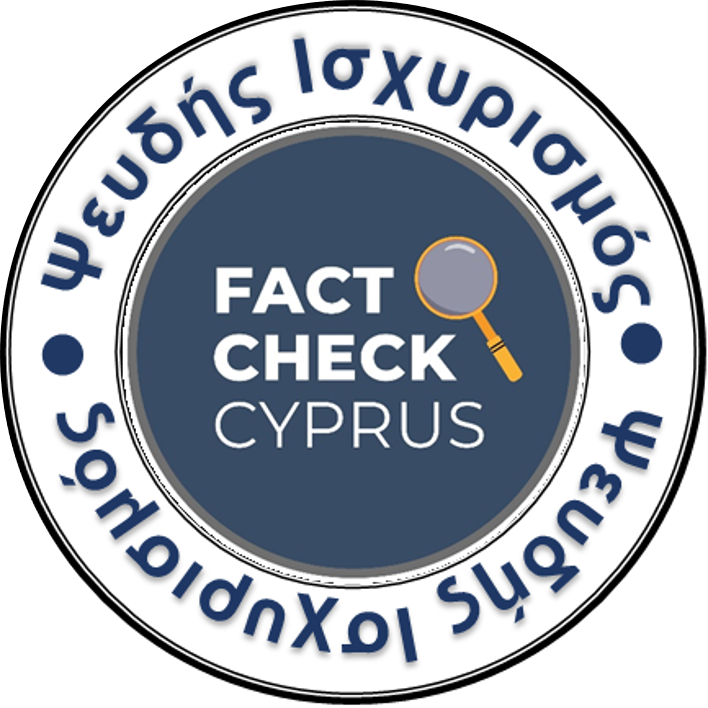
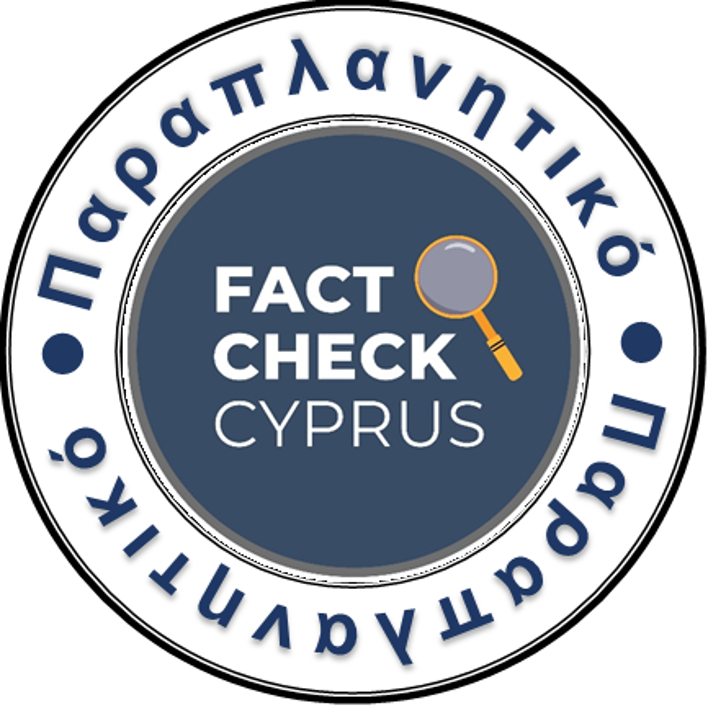
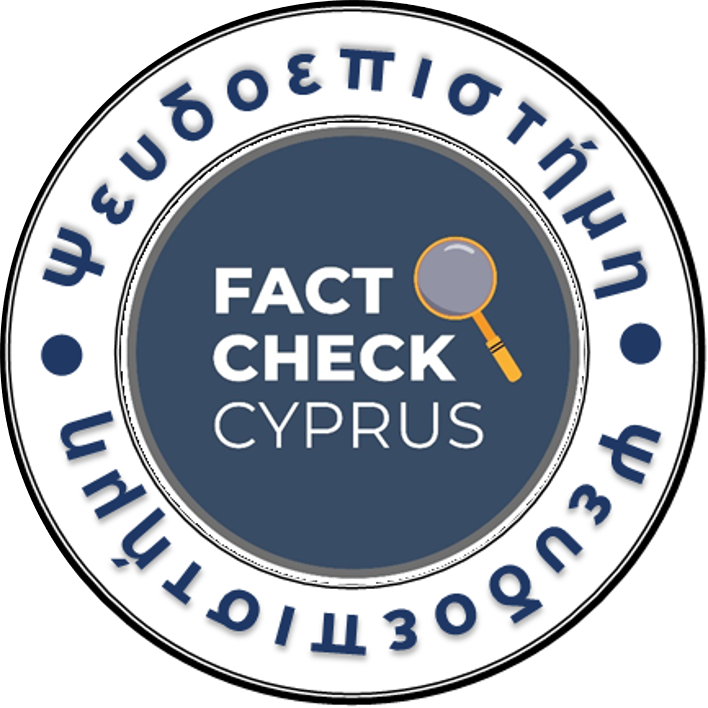
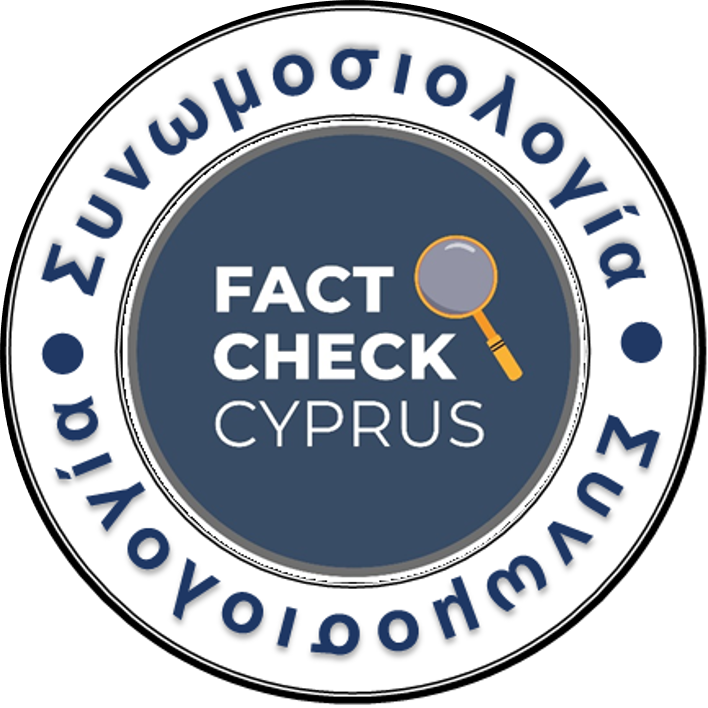
The analysed content is categorised into one or more of the following categories:
False Claim
Misleading
Lacks Context
Pseudoscience
Conspiracy Theories
Manipulated Image
Manipulated Video
Artificial Intelligence
Political
Fraud or Scam
We use labels to categorise our articles for the convenience of our readers.
Before publication, all analyses undergo two rounds of review by at least two writers in addition to the original author, in order to identify any errors and inaccuracies.
Methodology update, 06/11/2026: The following paragraph has changed as shown below:
Previous wording: “Furthermore, we offer any individual or organisation that is the subject of significant criticism or allegations in our investigations the right to comment or respond. Before publication, we inform the party concerned and give them up to 48 hours to submit a response. If we receive a response, it will be included in the investigation. Otherwise, we proceed with publication, but remain open to adding their response as an update, to ensure full transparency.”
New wording: “Furthermore, where we consider it necessary, we contact individuals or organisations to provide information or a response regarding claims under review that concern them. In such cases, before publication, we inform the party concerned and give them up to 48 hours to submit a response. If we receive a response, it will be included in the investigation; otherwise, we proceed with publication, but remain open to adding their response as an update, to ensure full transparency. In addition, after publication, we offer the right of reply to any individual or organisation that is the subject of significant criticism or allegations in our investigations. The party concerned may submit a response, which will be added to our article as an update after publication.”